The nature of conflict has changed—and so has its battlefield. Today, wars are no longer confined to borders; they ripple through ports, pipelines, factories, and freight corridors, quietly reshaping the flow of global commerce. For India, this shift carries immediate and tangible implications. As a rapidly growing economy deeply integrated into global trade networks, India is highly sensitive to disruptions in energy supplies, critical imports, and export corridors. From oil volatility in the Middle East to supply shocks triggered by the Russia–Ukraine conflict, distant geopolitical events are increasingly influencing domestic costs, production stability, and consumer prices. As Mihir Patel, Senior Vice President – Performance and Technology, AlixPartners, highlights, in this interconnected landscape, the real challenge is not just managing supply chains—but truly understanding them. Visibility and traceability are emerging as essential capabilities, helping Indian businesses navigate uncertainty, respond faster, and build resilience in an era where disruption is constant.
The War Is No Longer Just Physical… Recent geopolitical conflicts including the Russia–Ukraine war and the escalation of tensions between the United States and Iran, have demonstrated how quickly global supply chains can be disrupted by regional instability. What were once considered localized conflicts are now having far-reaching effects on trade routes, energy flows, agricultural exports, and the availability of critical industrial and household inputs.
Mihir Patel
These disruptions are not limited to governments or large multinational corporations. They increasingly affect day-to-day business operations and, in many cases, the everyday lives of consumers. Fluctuations in fuel prices, increases in food costs, delays in the availability of goods, and rising transportation expenses are often downstream effects of disruptions that originate thousands of miles away.
At the same time, global supply chains have become more interconnected and specialized. Companies rely on complex networks of suppliers, manufacturers, and logistics providers that span multiple regions and countries. While this has enabled efficiency and scale, it has also increased exposure to geopolitical events that can disrupt even a small but critical part of the network.
In this environment, companies need a clearer understanding of where their materials originate, how products move across borders, and which parts of their supply networks may be exposed to geopolitical risk. Without this visibility, disruptions are often identified too late, leaving limited options to respond effectively.
Traceability, which is the ability to track the origin and movement of materials and products across the supply chain, is therefore becoming an important capability for managing disruption and supporting more informed sourcing and logistics decisions. It provides organizations with a structured way to understand supply chain dependencies and respond more effectively when external events impact supply continuity.
For countries like India, which are deeply integrated into global manufacturing, energy, and agricultural trade networks, these challenges are particularly relevant. Indian industries depend on both global sourcing and export markets, making them sensitive to disruptions in key trade corridors and commodity flows. Strengthening traceability capabilities can help businesses better assess exposure, respond to disruptions more quickly, and operate with greater confidence in an increasingly uncertain environment.
HOW GEOPOLITICAL CONFLICTS DISRUPT SUPPLY CHAINS
Geopolitical conflicts affect supply chains through a set of interconnected mechanisms that, while varying in origin, tend to follow similar patterns in their impact on global trade and production systems. These disruptions typically manifest through three primary pathways: interference with trade routes and logistics networks, constraints on the availability of critical commodities and inputs, and cascading effects that propagate across industries and ultimately reach end consumers.
One of the most immediate consequences of geopolitical conflict is the disruption of key trade routes and logistics infrastructure. Global supply chains rely heavily on a relatively small number of strategic maritime corridors, and instability in these regions can quickly impede the movement of goods.
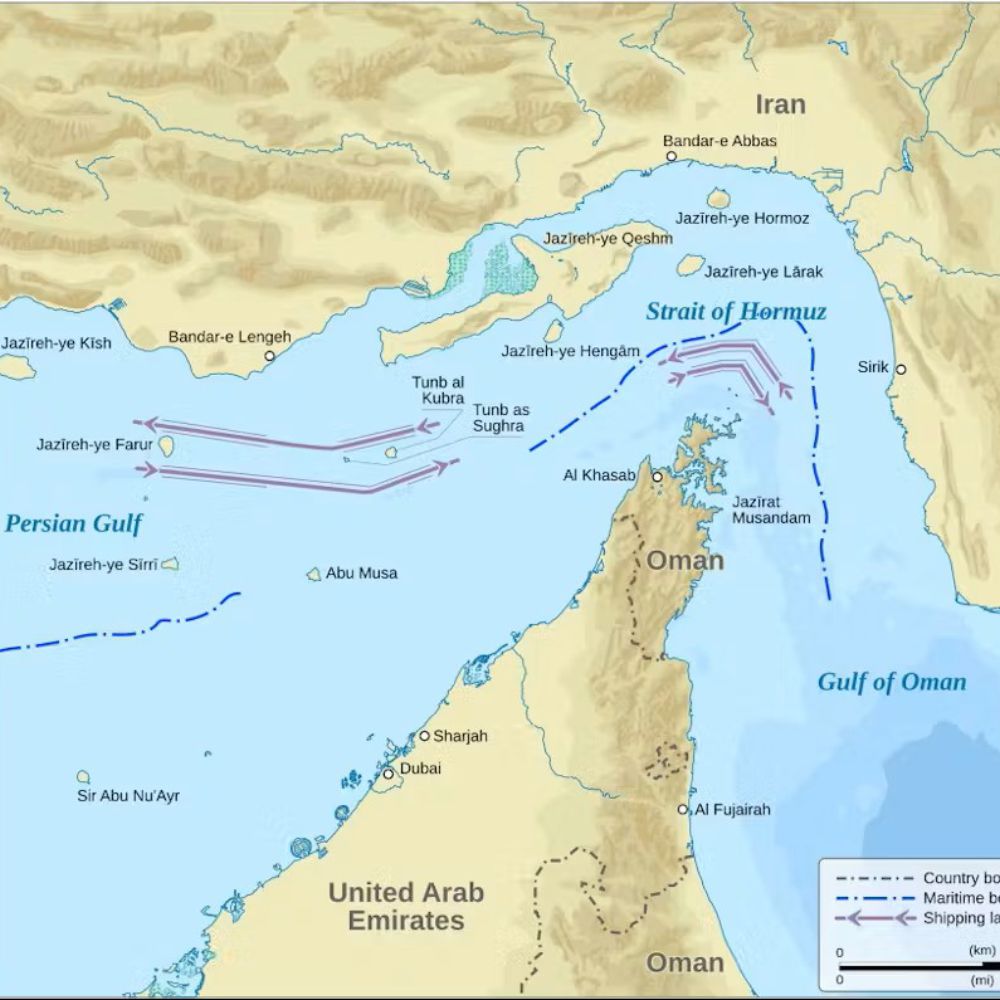
The escalation of tensions involving Iran has brought renewed attention to the Strait of Hormuz, a narrow but highly critical passage through which a significant share of global oil and liquefied natural gas shipments transit.
Any disruption in this region whether due to military activity, restricted passage, or heightened security risks can delay shipments, force rerouting of vessels, and increase transportation costs. Similarly, instability in the Red Sea region has led shipping companies to divert vessels around the Cape of Good Hope, significantly extending transit times between Asia and Europe.
These rerouting decisions increase fuel consumption, reduce effective shipping capacity, and create congestion at alternative ports. For businesses, such disruptions translate into longer lead times, higher freight costs, and reduced reliability of delivery schedules, all of which complicate planning and execution.
Beyond logistics, geopolitical conflicts often disrupt the availability of key commodities that serve as the foundation of global supply chains. The Russia–Ukraine war provides a clear example of this dynamic. Both countries are major exporters of wheat, fertilizers, and energy products, and disruptions to production and export infrastructure in the region have constrained global supply. This has led to price volatility and uncertainty, affecting downstream industries such as food processing, agriculture, and manufacturing. Tensions in the Middle East similarly influence global energy markets. Oil and gas are essential inputs across nearly all sectors of the economy, affecting transportation, production, and energy generation. When supply is disrupted or perceived to be at risk, prices tend to fluctuate, increasing cost pressures for businesses that rely on these inputs. In many cases, these inputs are sourced from geographically concentrated regions, making it difficult to quickly identify or transition to alternative sources when disruptions occur.
The broader impact of these disruptions is often felt through ripple effects that extend well beyond the initial point of disruption. An increase in oil prices, for instance, raises transportation and logistics costs, which in turn increases the cost of raw materials and finished goods. Manufacturers may absorb these costs temporarily, but over time they are often passed through to customers in the form of higher prices. Similarly, disruptions in agricultural inputs such as fertilizers can reduce crop yields, leading to increases in food prices that may only become apparent months later. In tightly integrated manufacturing environments, delays in the availability of even a single critical component can halt production lines, particularly in industries that operate with lean inventory models.
These cascading effects are what ultimately connect distant geopolitical events to everyday experiences, such as higher fuel costs, cooking gas scarcity, increased grocery prices, or delays in the availability of consumer and industrial goods.
Across different conflicts and regions, a consistent pattern emerges. Disruptions typically begin at a specific node within the supply chain, such as a supplier region, production facility, or transportation corridor. These disruptions then constrain the movement or availability of goods, which in turn propagate through the supply chain in the form of delays, shortages, or increased costs. Over time, these effects reach businesses and consumers, often in ways that are not immediately linked to the original source of disruption. This recurring pattern underscores a fundamental reality: supply chains are highly interconnected systems, and their resilience is often determined by their least visible or least understood points of vulnerability.
Despite the frequency and predictability of these disruptions, many organizations still lack a clear understanding of how such risks affect their own supply chains. In many cases, companies are unable to identify their exposure until disruptions have already begun to impact operations. This gap between external events and internal visibility presents a significant challenge and it is precisely this gap that traceability is increasingly expected to address.
THE VISIBILITY GAP IN TODAY’S SUPPLY CHAINS
While geopolitical disruptions are becoming more frequent and their impact patterns are increasingly well understood, many organizations still struggle to assess how these events affect their own supply chains. The primary reason is a persistent gap in visibility. Most companies lack a clear, end-to-end understanding of their supply networks beyond immediate suppliers.
Over the past two decades, supply chains have evolved to become more global, specialized, and interconnected. Companies have optimized sourcing strategies to improve cost efficiency, often relying on multi-tier supplier networks that span several countries and regions. While these structures have delivered scale and efficiency, they have also introduced layers of complexity that are not always fully visible. In many cases, organizations have strong relationships and visibility with their direct, or Tier 1, suppliers, but limited insight into upstream suppliers, sub-tier dependencies, and the origin of critical materials.
This lack of visibility becomes particularly challenging in the context of geopolitical disruptions. When a conflict affects a specific region, companies often find it difficult to quickly determine whether their supply chains are exposed.
For example, a manufacturer may not directly source materials from a conflict-affected country, but one of its Tier 2 or Tier 3 suppliers may depend on inputs from that region. Similarly, logistics disruptions in a key shipping corridor may impact suppliers located elsewhere, creating indirect exposure that is not immediately apparent.
The result is that many organizations are forced into a reactive mode of operation. Disruptions are often identified only after they begin to affect production schedules, inventory levels, or customer deliveries. At that point, response options are limited. Alternative suppliers may not be readily available, logistics routes may already be constrained, and decisions must be made with incomplete information. This reactive approach can lead to increased costs, operational inefficiencies, and reduced service levels.
Another dimension of the visibility gap lies in the movement of goods across the supply chain. Even when companies have a general understanding of their supplier base, they often lack real-time or near real-time visibility into how materials and products move through logistics networks. This includes limited insight into shipment routes, transit delays, and potential points of disruption along the way. As a result, companies may be aware of a disruption at a macro level such as congestion in a major shipping lane but unable to determine which specific shipments or products are affected.
In addition, data related to supply chains is often fragmented across systems and organizations. Supplier information, logistics data, inventory levels, and production plans are typically managed in separate systems, making it difficult to create a unified view of the supply chain. This fragmentation further limits the ability to quickly assess exposure and respond to disruptions in a coordinated manner.
The implications of this visibility gap are significant. Without a clear understanding of supply chain dependencies and flows, companies are unable to proactively identify risks, evaluate alternative scenarios, or make timely decisions when disruptions occur. In an environment where geopolitical events can quickly alter supply and logistics conditions, this lack of visibility becomes a critical constraint.
Addressing this challenge requires more than incremental improvements in reporting or data sharing. It requires a more structured approach to understanding supply chain relationships and material flows one that enables organizations to track not just who they buy from, but where materials originate and how they move through the network. This is where traceability begins to play a central role.
TRACEABILITY AS A PRACTICAL RESPONSE TO DISRUPTION
As organizations look to address the visibility gap in their supply chains, traceability is increasingly emerging as a practical and scalable capability. While often associated with quality assurance or regulatory requirements, traceability in this context serves a broader operational purpose: it provides a structured way to understand supply chain dependencies and respond more effectively to disruption.
At its core, traceability enables organizations to build a more complete picture of their supply networks. This begins with extending visibility beyond direct suppliers to map multi-tier relationships and identify where critical materials originate. In a geopolitically uncertain environment, this level of understanding becomes particularly important. It allows companies to assess whether key inputs are sourced from regions that may be exposed to conflict, instability, or logistical disruption. Without this insight, risks often remain hidden until they materialize in the form of supply shortages or delays.
In addition to understanding supplier dependencies, traceability provides visibility into the movement of materials and products across the supply chain. This includes tracking how goods flow through manufacturing sites, distribution networks, and transportation corridors. When disruptions occur whether due to port congestion, shipping delays, or route closures this level of visibility allows organizations to identify which shipments are affected and take targeted action. For example, companies can prioritize critical orders, adjust transportation routes, or reallocate inventory across locations to maintain service levels.
Another important benefit of traceability is its ability to support faster and more informed decision-making. In the absence of clear data, organizations often rely on assumptions or incomplete information when responding to disruptions. Traceability provides a more reliable foundation for evaluating options, such as switching suppliers, adjusting production schedules, or modifying inventory strategies. While it does not eliminate the impact of disruption, it reduces uncertainty and enables more coordinated and timely responses.
It is important to note that traceability does not require a complete overhaul of existing systems. In many cases, it can be developed incrementally by improving the way data is captured, connected, and shared across the supply chain. This may include enhancing supplier data, integrating logistics information, and establishing clearer links between sourcing, production, and distribution activities. Over time, these capabilities can be expanded to create a more comprehensive and dynamic view of the supply network.
In the context of geopolitical disruption, the value of traceability lies not in preventing disruption altogether, but in improving an organization’s ability to navigate it. Companies that have a clearer understanding of their supply chain structure and flows are better positioned to anticipate potential issues, evaluate alternatives, and respond with greater speed and precision.
As supply chains continue to operate in an environment characterized by uncertainty and external shocks, traceability is becoming less of a specialized capability and more of a foundational element of effective supply chain management.
IMPLICATIONS FOR INDIA: EXPOSURE AND OPPORTUNITY
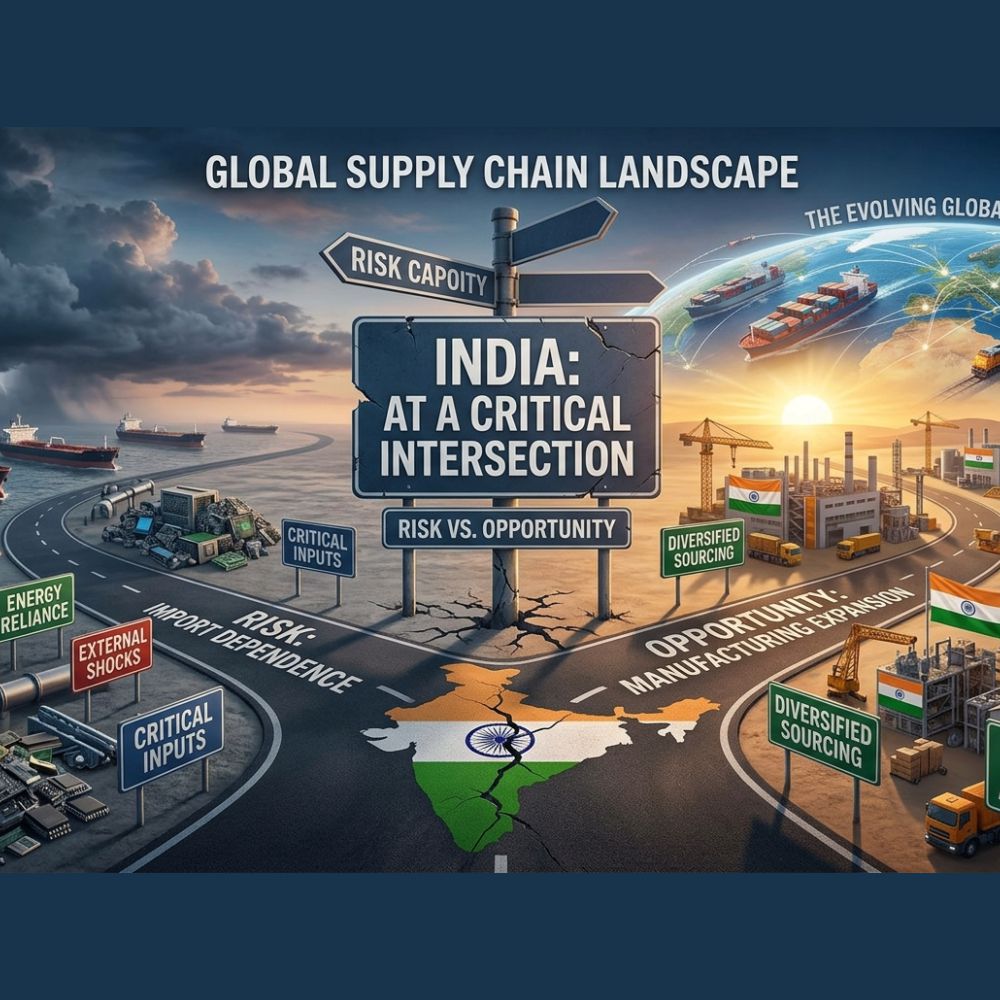
India’s position within global supply chains makes it both highly exposed to geopolitical disruptions and uniquely positioned to benefit from shifts in global trade patterns. As one of the world’s fastest-growing major economies, India is deeply integrated into international supply networks through both imports and exports. This integration spans a wide range of sectors, including energy, pharmaceuticals, automotive components, electronics, and agriculture.
A significant portion of India’s exposure stems from its dependence on imported inputs that are sensitive to geopolitical developments. Energy is a primary example. India relies heavily on crude oil imports, a large share of which originates from the Middle East. Disruptions in key shipping routes or supply constraints driven by regional tensions can have immediate implications for fuel prices, transportation costs, and broader industrial activity. Similarly, India imports critical components and raw materials such as electronic parts, specialty chemicals, and fertilizers that are often sourced through complex global networks. Disruptions in any part of these networks can affect production schedules and cost structures across multiple industries.
At the same time, India’s manufacturing and export sectors are closely tied to global demand and logistics flows. Industries such as pharmaceuticals, textiles, and automotive components depend on stable supply chains to meet international customer requirements. Delays in shipping routes, increased freight costs, or shortages of key inputs can affect competitiveness and service levels. As global companies reassess their sourcing strategies in response to geopolitical uncertainty, India is increasingly being considered as an alternative manufacturing base. However, to fully capitalize on this opportunity, businesses must be able to demonstrate reliability, consistency, and transparency in their supply chains.
This is where traceability becomes particularly relevant. For Indian companies, improving traceability can provide a clearer understanding of supplier dependencies, including exposure to regions affected by geopolitical instability. It enables organizations to identify potential risks earlier and evaluate alternative sourcing or logistics strategies before disruptions escalate. In sectors with complex, multi-tier supply chains, such visibility can make a meaningful difference in maintaining continuity and managing costs.
Traceability also supports more effective coordination across sourcing, production, and distribution activities. By linking information across these functions, companies can respond more quickly to changes in supply or demand conditions. For example, if a disruption affects a particular supplier or route, organizations with stronger traceability capabilities are better positioned to adjust production plans, reallocate inventory, or identify substitute inputs.
Beyond risk management, there is also a strategic dimension for India. As global supply chains evolve, there is increasing emphasis on building networks that are not only cost-effective but also resilient and transparent. Countries and companies that can offer greater visibility into their supply chains are likely to be viewed as more reliable partners. For India, this presents an opportunity to strengthen its position in global manufacturing and trade by aligning operational capabilities with emerging expectations around supply chain transparency and responsiveness.
In this context, traceability is not only a tool for managing disruption but also an enabler of competitiveness. It allows Indian businesses to operate with greater confidence in uncertain conditions while positioning themselves more effectively within a changing global supply chain landscape.
MOVING FROM EFFICIENCY TO RESILIENCE
For many years, supply chain strategies were primarily designed around efficiency. Organizations focused on optimizing costs, reducing inventory, and building lean, globally distributed networks that could take advantage of scale and specialization. This approach delivered significant benefits, enabling companies to improve margins and expand their reach across markets. However, it also introduced dependencies that were not always fully understood or visible.
Recent geopolitical developments have highlighted the limitations of this model. Conflicts, trade disruptions, and instability in key regions have shown that supply chains optimized solely for efficiency can be vulnerable to external shocks. When disruptions occur, the lack of visibility into supplier networks, material flows, and logistics pathways makes it difficult to respond quickly and effectively.
As a result, there is a growing shift toward building more resilient supply chains. This does not imply abandoning efficiency, but rather balancing it with greater visibility, flexibility, and preparedness. Organizations are increasingly looking to understand where their critical dependencies lie, how disruptions may propagate through their networks, and what options are available to mitigate risk.
Traceability plays an important role in enabling this shift. By providing a clearer view of supply chain structures and flows, it allows companies to move from reactive responses to more informed and proactive decision-making. It supports better evaluation of sourcing strategies, improved coordination across functions, and more effective management of disruptions when they occur.
In an environment where geopolitical uncertainty is likely to remain a defining feature of global trade, the ability to understand and adapt supply chains becomes a key differentiator. Companies that invest in strengthening visibility and traceability capabilities are better positioned to navigate disruptions while maintaining service levels and operational stability.
Ultimately, the ‘War of Supply Chains’ is not about eliminating disruption, but about improving the ability to operate within it. As supply chains continue to evolve, traceability is becoming a foundational capability that supports resilience, informed decision-making, and long-term competitiveness.


 Categories