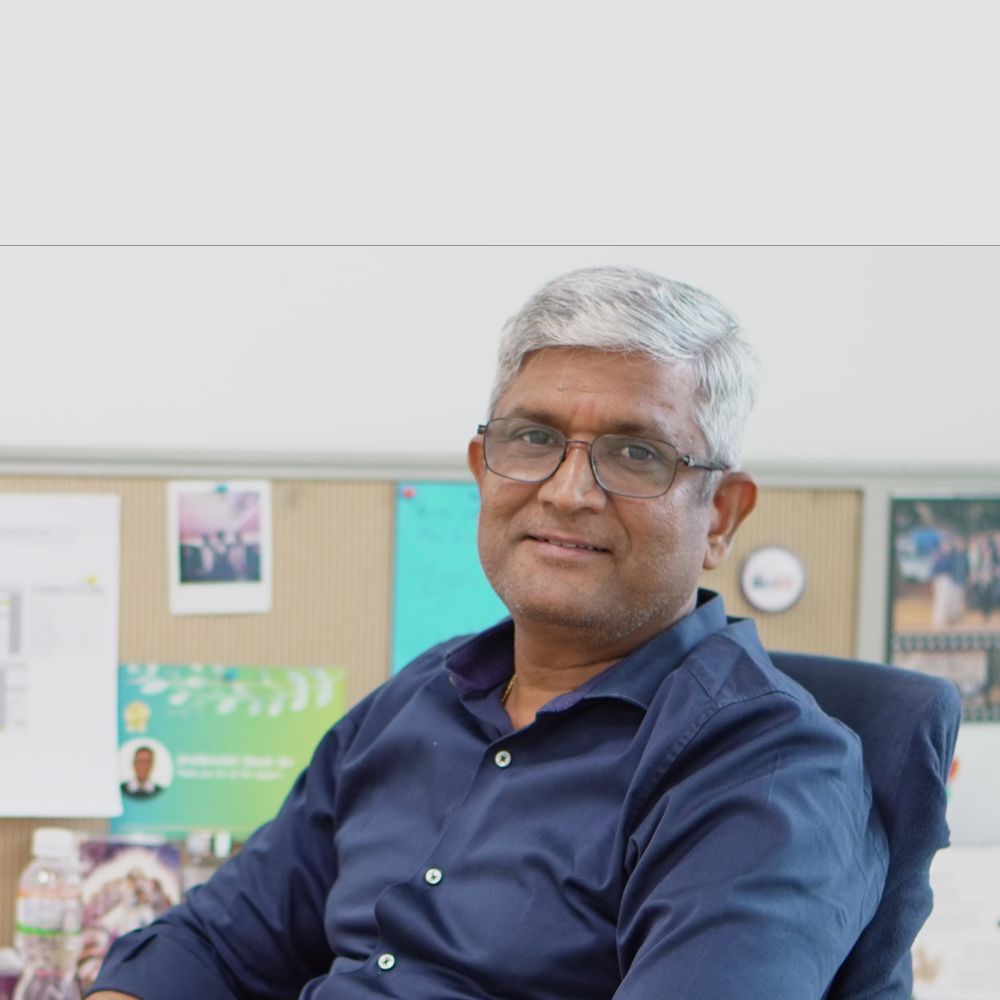
As fashion cycles accelerate and consumer expectations shift from seasonal drops to instant availability, the supply chain has quietly become fashion’s most strategic lever. At FabIndia—where heritage craft meets modern retail—this transformation is unfolding at scale. In this conversation, Nitin Joshi, Chief – Supply Chain Management, Fabindia, explains how the brand is moving from static inventory to fluid fulfilment, embedding digital intelligence across its network, and building a resilient, India-first ecosystem capable of delivering both thousands of products to stores and a single piece to a customer’s doorstep—seamlessly, sustainably, and in real time.
Fashion cycles are shrinking, and consumer expectations are rising. How are you restructuring your supply chain to deliver speed, flexibility, and constant freshness without compromising efficiency?
Speed and flexibility today are no longer operational advantages—they are basic expectations. At FabIndia, we have fundamentally reimagined our supply chain by moving away from a static “store goods” mindset to a dynamic “moving goods” ecosystem, where inventory is continuously flowing, intelligently positioned, and demand-responsive. This transformation is anchored in an omni-channel-first philosophy, supported by three critical pillars.
First, unified inventory across every channel. Inventory is no longer owned by a single channel but is simultaneously visible and available across physical retail, B2C e-commerce, and quick-commerce platforms. Our stores have evolved into intelligent fulfilment nodes, enabling ship-from-store and same-day delivery by fulfilling orders from the closest possible location. This proximity-driven model dramatically improves speed while optimising last-mile costs.
Second, store-ready merchandise (SRM). We work in close partnership with our vendor ecosystem to ensure merchandise reaches our warehouses fully pre-packed, pre-tagged, and pre-sorted. By eliminating internal processing steps, we significantly reduce handling time and improve throughput. During peak festive periods, we further accelerate speed-to-market through direct-to-store (D2S) shipments, allowing high-demand stores to receive merchandise directly from vendor locations.
Third, large-scale cross-docking. Enabled by advanced sortation technologies, a substantial portion of our assortment—across fashion, home, personal care, and organic food—moves directly from inbound to outbound docks without ever entering long-term storage. This approach keeps inventory fresh, reduces dwell time, and allows us to respond rapidly to shifting demand signals.
From AI-driven forecasting to RFID-enabled visibility, which digital interventions are creating the most meaningful transformation across your end-to-end supply chain?
Digital intelligence has become the connective tissue of our supply chain, enabling faster decisions, tighter execution, and greater precision.
Smart identification and auto-replenishment allow us to track product performance in near real time. When a particular style or category shows strong momentum, the system automatically triggers replenishment—ensuring availability before shelves empty.
Close-to-trend production is another major shift. Instead of locking plans months in advance, we now leverage live sales data to recalibrate production priorities weekly. This allows us to stay closer to evolving consumer preferences while reducing the risk of overproduction.
Dynamic stock balancing and markdown optimisation help us maintain freshness across the network. The system identifies slow-moving inventory and recommends inter-store transfers or calibrated markdowns, ensuring space is continuously freed for new collections.
Never missing a sale has been a significant customer-centric gain. If a desired product is unavailable, our systems intelligently suggest alternatives—similar styles, colours, or fits—preserving both customer satisfaction and revenue.
Underlying all of this is end-to-end visibility. Integrated PLM systems, SKU-level warehouse management, and GPS-enabled transport management provide a real-time view of inventory and movement—from a vendor’s gate to the customer’s doorstep.
With sustainability becoming non-negotiable, how are you embedding circularity, responsible sourcing, and low-impact materials into your supply chain?
Sustainability is not an overlay for us—it is intrinsic to how FabIndia operates. We predominantly work with natural fibres and traditional, low-impact production techniques that inherently carry a lower environmental footprint.
Operationally, we are steadily integrating renewable energy, with select warehouse activities powered by solar energy. Transportation is also transitioning toward lower-emission alternatives, with increased adoption of electric and CNG vehicles across our logistics network.
Circularity is addressed through practical execution. Slow-moving inventory is redirected through alternate sales channels, extending product life cycles, minimising waste, and ensuring responsible consumption without compromising commercial discipline.
As global sourcing shifts due to geopolitical and cost pressures, how are your vendor partnerships and manufacturing geographies evolving?
Our sourcing strategy remains deliberately and deeply local. One hundred percent of our products are sourced within India, spanning some of the remotest craft clusters in the country. These clusters are supported through regional sourcing hubs and on-ground field offices, ensuring consistent engagement and quality oversight. New clusters continue to be added as part of our long-term ecosystem-building approach. Strong inbound visibility, combined with a robust and responsive logistics network, enables us to move goods quickly across vast geographies. This allows us to mitigate delays, manage costs effectively, and maintain reliability despite regional complexity.
What risk-management frameworks are you adopting to ensure continuity, resilience, and agility?
We have consciously evolved toward a supply chain model that balances flexibility with resilience.
Multi-sourcing is central to this strategy. Our vendor ecosystem spans three generations of partners, built on long-standing trust and collaboration. These relationships often prove most valuable during periods of uncertainty.
Flexible capacity is enabled through regional Market Region Warehouses (MRWs), which allow us to absorb sharp volume surges during peak seasons such as Diwali and end-of-season sales.
Predictive analytics further strengthens resilience. By using data to anticipate disruptions before they occur, we can proactively prioritise production, reroute inventory, and maintain momentum even under pressure.
With online, D2C, and physical retail converging, how are you reengineering inventory planning, fulfilment, and last-mile operations to deliver seamless customer experiences?
We are steadily progressing toward what we call autonomous supply chains. Today, our systems already predict and execute inter-store stock balancing, trigger dynamic markdowns based on rate of sale, and pull back ageing inventory to warehouses—significantly improving freshness at the store level.
What truly defines the transformation is integration. Production, warehousing, logistics, and stores now operate as a single, synchronised network. Our warehouses and stores have evolved into unified fulfilment engines—capable of dispatching thousands of pieces to a showroom while simultaneously shipping a single item to a customer’s home.
This convergence reflects modern consumer behaviour: a customer may discover a product in-store and complete the purchase online days later. The experience feels seamless because inventory is merged, visible, and traceable in real time across the country—ensuring fulfilment happens effortlessly, regardless of where the buying journey begins.
If you had to envision the fashion supply chain of 2030, what is the single biggest transformation that will define the industry—and how are you preparing for it today?
By 2030, the defining shift will be the rise of self-thinking supply chains. Systems will autonomously sense demand, reorder inventory, rebalance stock across networks, and execute fulfilment with minimal human intervention. Advancements in RFID will enable near-instant inventory counting across massive warehouses, while high-speed, multi-SKU sortation systems will handle complex assortments with ease. Emerging technologies—potentially including drones—may further redefine last-mile delivery.
Our preparation has already begun. We are investing heavily in strong data foundations, integrated digital platforms, and continuous capability-building—ensuring our teams are equipped to work alongside intelligent systems and lead the next phase of supply chain evolution.





 Categories