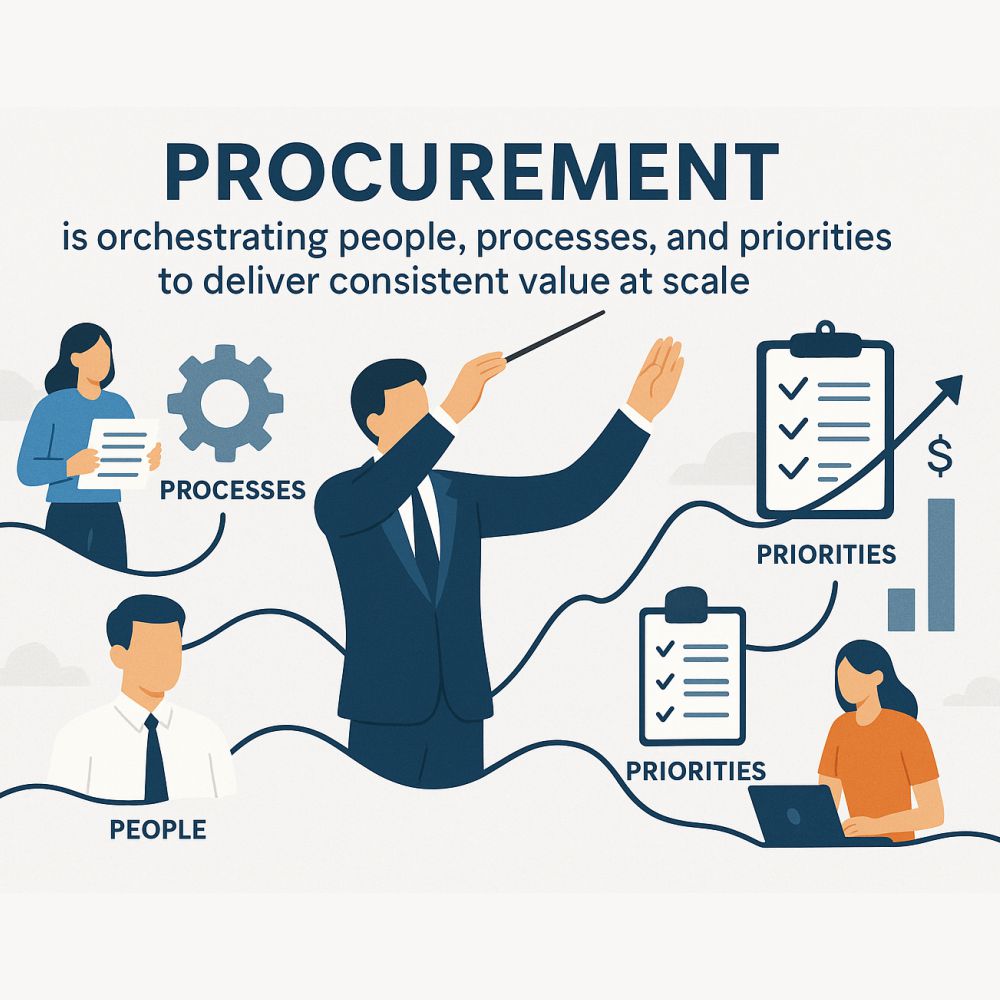
As supply chains face continuous disruption, rising ESG scrutiny, and accelerating digital change, procurement is being redesigned at a structural level. This conversation with Nikunj Desai, Head – Procurement, Nayara Energy, examines how the function is moving beyond transactional efficiency to orchestrating value—balancing cost, continuity, risk, and sustainability; strengthening multi-tier visibility; embedding digital intelligence into everyday decisions; and building teams equipped to lead through uncertainty. The emerging mandate is clear: procurement must deliver resilience, responsibility, and enterprise-wide impact.
Across your 25+ years in diverse industries, what fundamental procurement principles have stayed constant for you?
Across my 25+ years in procurement, certain fundamentals have remained constant. The core principles of integrity, transparency, total cost thinking, vendor partnership and proactive risk management have never changed. What has evolved is how we apply them, with deeper analytics, broader stakeholder expectations, and stronger sustainability lenses. But the foundational belief remains that procurement must not merely reduce cost but create value responsibly.
Nikunj Desai
How do you define a procurement function that goes beyond cost savings to drive enterprise-wide value?
A procurement function that goes beyond cost savings acts as a strategic partner to the business, shaping outcomes rather than simply controlling costs. It enhances customer facing capabilities by enabling the right suppliers, builds agile and resilient supply chains, and creates strong, integrated partnerships between the organization and its supplier ecosystem. Such a function plays a pivotal role in influencing design choices, investment decisions, operating models, and ESG commitments, areas that have a far greater impact than price alone. By actively enabling supplier led innovation while stewarding risk, procurement helps future proof the organization. When procurement operates at this level, the value it delivers is not just financial, it is strategic, measurable, and sustained over the long term.
What frameworks do you rely on to balance cost, quality, risk, and service continuity in category management?
In category management, I rely on structured yet flexible frameworks that balance cost, quality, risk, and business continuity. The combination of TCO modelling, Kraljic segmentation, should cost analysis, and continuous supplier performance management helps ensure that decisions are not one dimensional. I have learned that in volatile markets, risk management and business continuity matters more than absolute lowest cost.
How has multi-sector exposure shaped your philosophy on responsible and sustainable procurement?
My multi-sector experience across heavy engineering, automotive sourcing and supplier development, engineering sourcing and warehousing at tyre manufacturing, managing a global end to end supply chain at pharma focussed organization has shaped a responsible and sustainable procurement philosophy that is both strategic and grounded in real world execution.
Responsibility must be both local and global: My cross-sector and cross-geography experience revealed varying realities like MSME capability challenges in India, rigorous compliance environments in the US and Europe, advanced expectations around logistics and carbon efficiency in developed markets and across all regions, the shared need to manage materials responsibly to reduce waste, risk, and lifecycle impact. A responsible procurement leader must bring these together into one coherent strategy that remains adaptable to local contexts.
Heavy Engineering taught me engineering discipline and long cycle responsibility: I learned that sustainable procurement begins with technical rigor, engineering reliability, and lifecycle thinking. Large projects reinforced the importance of quality assurance, strong vendor governance, and evaluating choices through long term safety, reliability, and environmental impact — not just cost.
Automotive taught me that sustainability is inseparable from supplier capability: It showed me that responsible procurement depends on strengthening the supplier ecosystem. MSMEs often need capability building, process improvement, and technology support. Responsible sourcing here meant raising standards, not just enforcing them.
Tyre Industry taught me operational sustainability: My role in engineering sourcing and warehousing made sustainability tangible at the execution level. I realized that responsible procurement also means: choosing durable, reliable consumables to minimize breakdowns and waste, ensuring to uphold strong EHS practices, and running efficient, disciplined warehouses to avoid losses, excess, safety, and environmental burden. Sustainability is as much about lean, reliable operations as it is about upstream sourcing.
Global Supply Chain taught me consistency with adaptability: Managing Global supply chain across 15 plants worldwide brought responsibility to a global scale — uniform compliance, ethical sourcing across diverse markets, multi-tier traceability, carbon efficient logistics, and a balanced global–local sourcing model. It reinforced that responsible procurement must be globally consistent yet locally sensitive.
In essence, my multi-sector exposure shaped a philosophy where responsible procurement is not a standalone initiative — it is embedded in engineering discipline, supplier development, operational excellence, global compliance, and long term value creation. It must be practiced and executed every day across the entire supply chain.
What, in your view, differentiates a mature procurement organization from a transactional one?
At its core, a mature procurement organization is defined by how it influences business outcomes rather than how it executes transactions. It differs from a transactional model in three keyways:
It operates as a strategic partner to business, not a back office service
It uses intelligence – data, insights, and analytics to drive decisions
It measures success through value, risk reduction, innovation, and sustainability, not just cost savings
The mindset shifts from “What did we buy?” to “How did we shape the business outcome?”
When establishing centralised sourcing, what early decisions determine whether the model will be efficient, scalable, and sustainability-aligned?
When setting up centralized sourcing, early decisions make or break scalability. The most critical include:
Defining clear governance structures, interfaces, RACI matrices, and decision rights
Establishing a unified data and category taxonomy
Aligning stakeholders on what should be centralized versus decentralized
Equally important, building collaboration and credibility around the model, giving stakeholders confidence that agility and flexibility will be retained while efficiency is improved.
Without this clarity, the process risks becoming bureaucratic; with it, centralized sourcing becomes a catalyst for efficiency, innovation, and sustainability.
In your experience integrating global supply chains, what are the most underestimated ESG and compliance challenges?
In global supply chains, ESG and compliance risks are most often underestimated at sub tier levels. Visibility typically drops beyond Tier 1 suppliers, making Tier 2 and Tier 3 labor practices, environmental compliance, and data reliability the most significant blind spots. Many organizations assume compliance because Tier 1 suppliers confirm it, however, material risk often resides deeper in the ecosystem.
Responsible procurement therefore requires sustained investment in multi tier traceability, independent audits, and supplier capability building, extending well beyond direct suppliers. There have been instances where suppliers passed internal process audits yet remained non compliant with local environmental regulations, leading to plant shutdowns and serious supply disruptions. These situations highlight that compliance today must go beyond process adherence to ensure overall regulatory conformity and business continuity.
Similarly, global disruptions have demonstrated how opaque sub tier dependencies can expose supply chains to sudden shocks. Cases where Tier 2 suppliers were concentrated in regions affected by natural or geopolitical events caused unexpected downstream disruptions when dependencies were not fully disclosed. Greater transparency and sub tier visibility could have enabled earlier risk mitigation and alternate sourcing strategies.
With commodity volatility, geopolitical disruptions, and climate-linked risks rising, how do you build resilience into procurement systems?
Resilience today is structural, not reactive. Building it against commodity volatility, geopolitical disruption, and climate-related risks requires diversified sourcing through geographic de-risking; scenario-based planning that tests “what-if” situations; flexible contracting; a shift toward just-in-case rather than just-in-time inventory; digital tools that enable end-to-end visibility; and, most importantly, close supplier partnerships that provide early warning signals.
How can procurement ensure that digital transformation translates into measurable business and sustainability outcomes?
Procurement can ensure digital transformation delivers measurable business and sustainability outcomes by focusing on four essentials:
Start with clear outcomes, not tools: Most important in digitalization is “Are your people ready” for adoption. People and Organizational readiness are very important to start with. Adoption and success of the tools depend on this. Define the business problem first— e.g. cost visibility, cycle time reduction, supplier risk, carbon tracking—and deploy digital solutions only where they can move these metrics. Formulate a digital roadmap which will weigh the cost-benefit analysis with respect to the highest pain point, maturity of tool, and implementation timelines of tool. This will help lay down a 2-3 year roadmap in terms of priority. Most important is to start with – Define the parameters to call a successful implementation of the tool.
Build a strong data and process foundation: Clean data, harmonized taxonomy, and disciplined Input/Output parameters are what make analytics, AI, and automation actually work. Without this, digital tools cannot generate reliable insights.
Embed digital into daily decision making: Digital must power core workflows— e.g. sourcing, contracting, supplier performance, risk, ESG reporting—so that decisions become faster, more transparent, and evidence based.
Hard wire KPIs and drive adoption: Link every digital initiative to measurable KPIs: cost savings, risk reduction, service levels, carbon footprint. Then invest in capability building so teams and suppliers use the tools consistently. Once digital tool is implemented, we need to run a reality check – Are all elements in the chain connected. Are we entering any data again in terms of duplication, is the information shown real-time and correct (One Truth).
Your supply chain strategy has been showcased for resilience—what lessons from that experience are applicable to future disruptions?
Regarding supply chain resilience, the most transferable lessons are:
Geographic de-risking. Diversification beats over optimization
What-if scenario based readiness
Supply reliability takes precedence
Supplier relationships outperform contract driven interactions during crises
Multi-tier visibility
Digital tools – What is happening (descriptive analytics), what could happen (Predictive Analytics) and what should happen (Prescriptive Analytics).
These principles remain timeless as disruptions become more frequent and interconnected.
What skills and mindsets define the next generation of procurement and supply chain professionals in a sustainability-first era?
The next generation of procurement talent will require new skills and mindsets. Beyond core functional expertise, future leaders will be defined by digital fluency, sustainability literacy, systems thinking, scenario analysis, and strong influencing capabilities. Procurement professionals must evolve into analysts, risk managers, sustainability advocates, and business strategists—not just buyers.
What leadership practices have proven most effective for building empowered, high-performing, multi-location procurement teams?
Building empowered, high performing multi-location teams requires:
A clear shared purpose and expectations on outcomes
Empowerment to take decisions within the organizational process boundaries. Standing by with team on decisions made and building guard rails for future decision making in case of errors
Transparent communication with everyone being on the same page
Regular reviews on goals and debottlenecking
Capability development
A culture that values initiative, curiosity, and accountability. Geography shouldn’t be a barrier when purpose is strong.
Looking ahead to 2030, what major shifts do you anticipate shaping the future of procurement and supply chain management?
By 2030, procurement will be reshaped by five major shifts:
Net zero Goals in supply chains
Disruptions become a norm:
Supplier diversification to overcome disruptions linked to – Geopolitical and Climate changes
Just in case inventory will take precedence over ‘Just in time’
Supplier relationships will become a key differentiator to get supply reliability
Audits to assess supplier business continuity will take precedence over normal Supplier Audits
Autonomous and AI driven procurement (AI agents executing certain jobs with humans to monitor/ channelize the decisions)
Mandatory multi-tier traceability and ESG compliance
Regionalization and near shoring of supply chains
Ultimately, procurement will evolve from managing supply to orchestrating value, balancing resilience, sustainability, and business outcomes across the enterprise.





 Categories