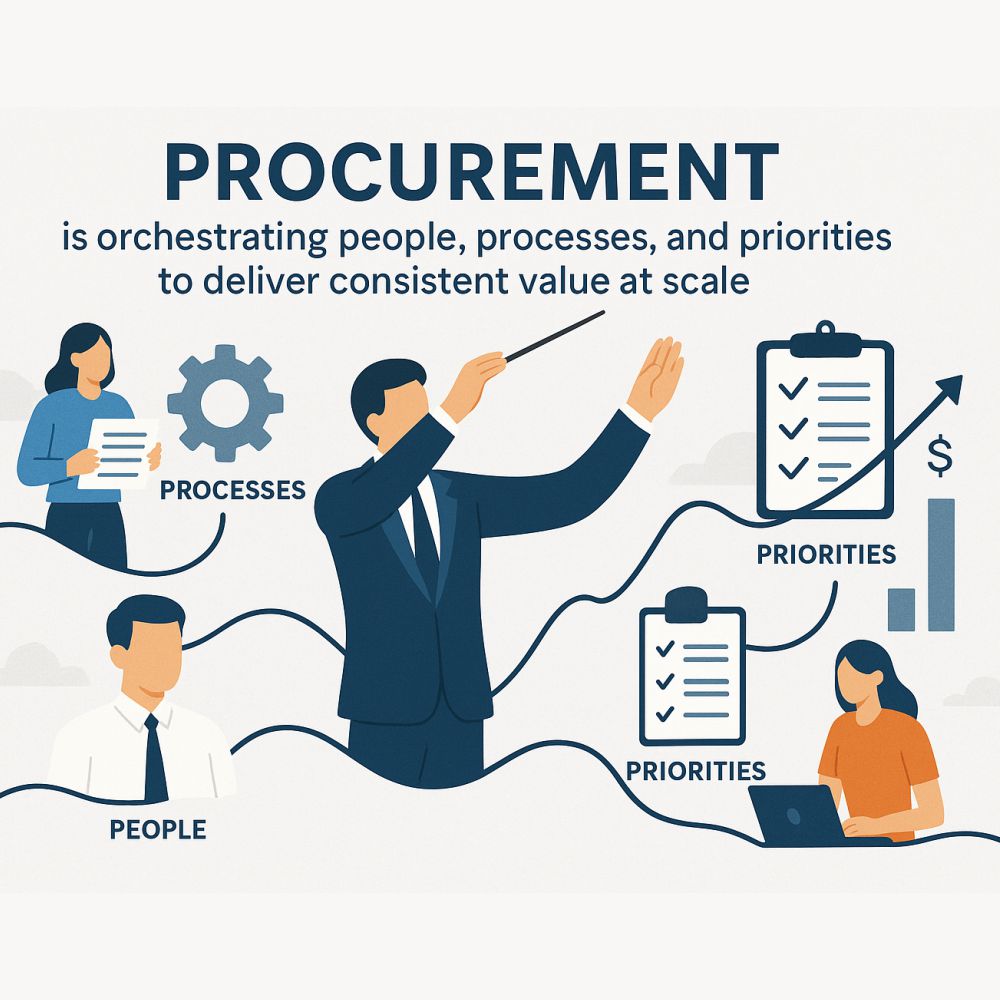
The most significant shifts in procurement are not always the loudest ones. As AI becomes more deeply embedded in how decisions are shaped and executed, it is quietly redefining the function’s centre of gravity—from Process-Driven Execution to Insight-Led Strategy, from Speed to Precision, and from Support to Influence. What is emerging is a more aware, responsive, and strategically aligned function. In this opinion piece, Milind Tailor, Global Head – Resale Products & Services Procurement, Diebold Nixdorf Inc., reflects on how this evolution is elevating procurement’s role while reshaping the capabilities that will define its future trajectory.
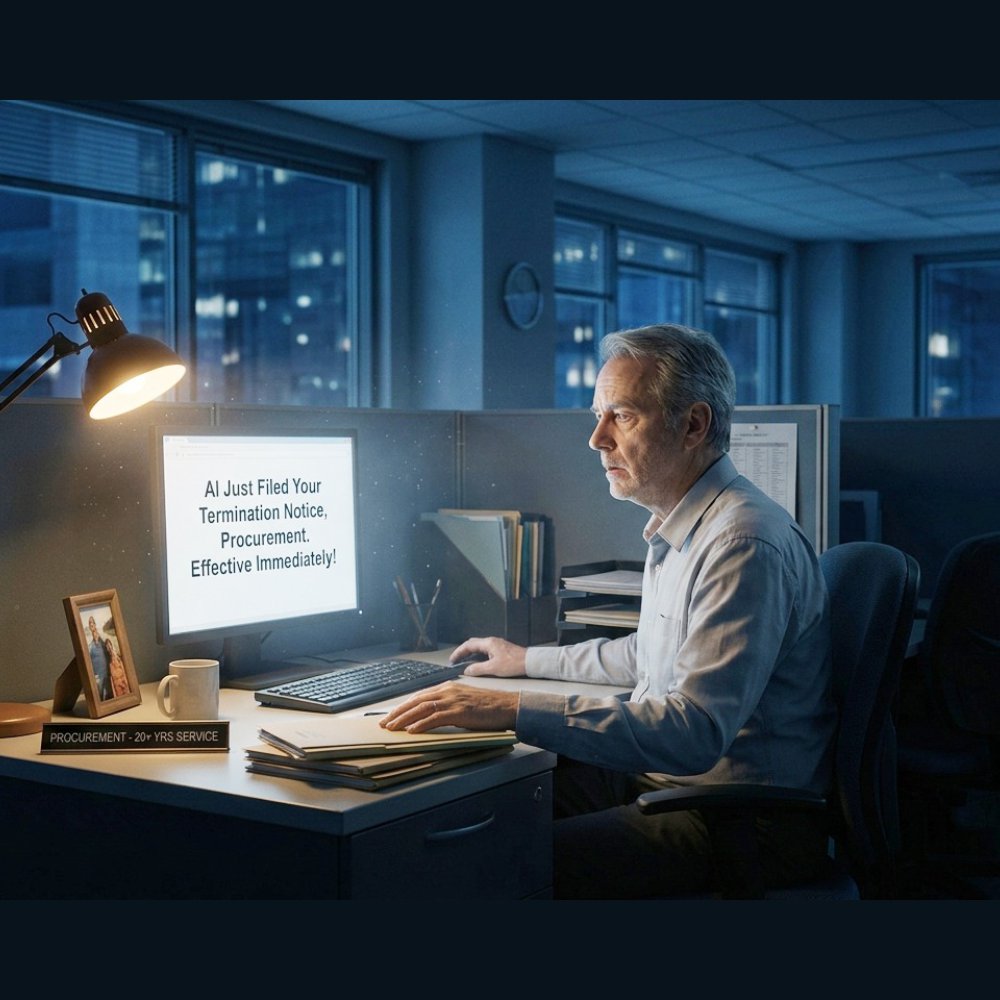
AI just filed your Termination Notice, Procurement. Effective Immediately!
Milind Tailor
I’ve spent over two decades in procurement and supply chain. I’ve seen technology come and go — each wave promising revolution, delivering evolution. This one is different. WHY? Every other disruption still needed us to drive it. This one is quietly learning to drive itself. You Were Optimising the Wrong Thing. AI Was Already Running the Meeting. Procurement used to run on experience. It’s about to run on algorithms. Where does that leave you? Procurement prides itself on risk management. It just missed the biggest risk sitting inside its own function. Your competitors aren’t piloting AI anymore. While you were debating the business case, they were already making faster decisions, closing better deals, and seeing risks you haven’t spotted yet.
Ask yourself honestly — how many of last quarter’s sourcing decisions were genuinely strategic? How many were data gathering dressed up as judgement? AI doesn’t dress things up. It just does it faster and shows you the number. And nobody announced that shift. No memo. No transformation programme. No change management plan. Procurement functions that integrated AI simply started outperforming everyone else — quietly, consistently, quarter by quarter — and the gap became a chasm that is now very difficult to close. This is not about tools. This is not about dashboards. This is the end of procurement as we knew it — and the beginning of something most functions are dangerously unprepared for.
THE RISE OF THE ALWAYS-ON INTELLIGENCE LAYER
Meet Your New Colleague — Always Awake, Never Tired, and Already Outperforming You. AI doesn’t clock out. The question is — do you clock in purposefully? Let’s be fair to the technology — the colleague framing is where it genuinely starts. AI at this stage is an extraordinary teammate. It eliminates the work that was quietly exhausting your best people. The data gathering. The market scanning. The spend analysis that took three analysts a week and still wasn’t complete when the decision needed to be made.
Category managers who spent 60% of their time on data wrangling suddenly have that time back. They’re building supplier relationships, thinking strategically, doing the work they were hired to do and rarely got to. That part is real. And it’s genuinely good. But sit with this for a moment and let it sink in… That colleague is learning. Every decision you make, every contract you approve, every supplier you select — it’s watching, processing, pattern-matching. It is building a precise model of how procurement decisions get made in your organisation. And here’s what nobody is saying loudly enough: it is getting better at your job faster than you are.
Your new colleague doesn’t need onboarding. It doesn’t have a bad quarter. It doesn’t get political, doesn’t get tired, and doesn’t leave the negotiation early because it had a school run. The spreadsheet used to be the smartest thing in the room. It isn’t anymore.
FROM DECISION-MAKING TO DECISION VALIDATION
You Hired a Colleague. You Didn’t Realise You Were Hiring Your Boss. Now You’re Just There to Validate. You’re Not the Decision Maker Anymore. You’re the Decision Validator. There’s a Difference. The org chart still says you’re in charge. The data disagrees. Organisations follow results. When AI-driven procurement decisions consistently outperform human-led ones — on cost, risk, speed, compliance — the org chart quietly reorganises around that reality. Not with a dramatic announcement. Deal by deal. Quarter by quarter. AI recommendations become the default. Human override becomes the exception that needs justification. We are already watching this happen in real time.
Procurement leaders ratifying AI recommendations rather than making independent judgements. Teams where the system flags, scores, and ranks — and the human validates. That is not strategic oversight. That is expensive administration. Most procurement functions are not building the human capabilities that would remain valuable once AI handles the analytical core of the job. The skills that will matter — real supplier relationships built on years of trust, the political intelligence to navigate the boardroom, the ethical judgement to know when the data-driven answer is technically correct but fundamentally wrong — these are not being developed deliberately.
They are being deliberately crowded out by the very administrative work AI is about to permanently eliminate. Which means when the transition fully lands, many procurement professionals will find themselves with neither the technical capability to manage AI systems nor the human depth to justify their presence without them.
CAUGHT BETWEEN TWO WORLDS. VALUED IN NEITHER.
This is not a forecast for 2030. This is the trajectory of procurement functions I am watching right now. The delta between leaders who see it and those who don’t is already widening — and it is widening fast. The Most Dangerous Place in Procurement Right Now Is Comfortable. Procurement is full of talented, experienced people who built careers on making the right call under pressure. This is the pressure. This is the call.
You can still define what human procurement leadership looks like inside an AI-managed function. You can still build the relationships, the judgement, and the organisational influence that no model will ever replicate. But that space is shrinking — and it is shrinking on a timeline you don’t control, driven by decisions being made right now in boardrooms that aren’t waiting for procurement to catch up. The question was never whether AI would change procurement. The question — the only one that matters now — is whether you’ll still be relevant when it does.
AI Is Rewriting the Rules of Procurement. Ensure You Are Holding the Pen. I’ve seen procurement professionals rise to every challenge this industry has thrown at them. This one is different — not because it’s harder, but because it doesn’t announce itself. Where are you honestly in this? The most uncomfortable answers usually start the most important conversations!


 Categories