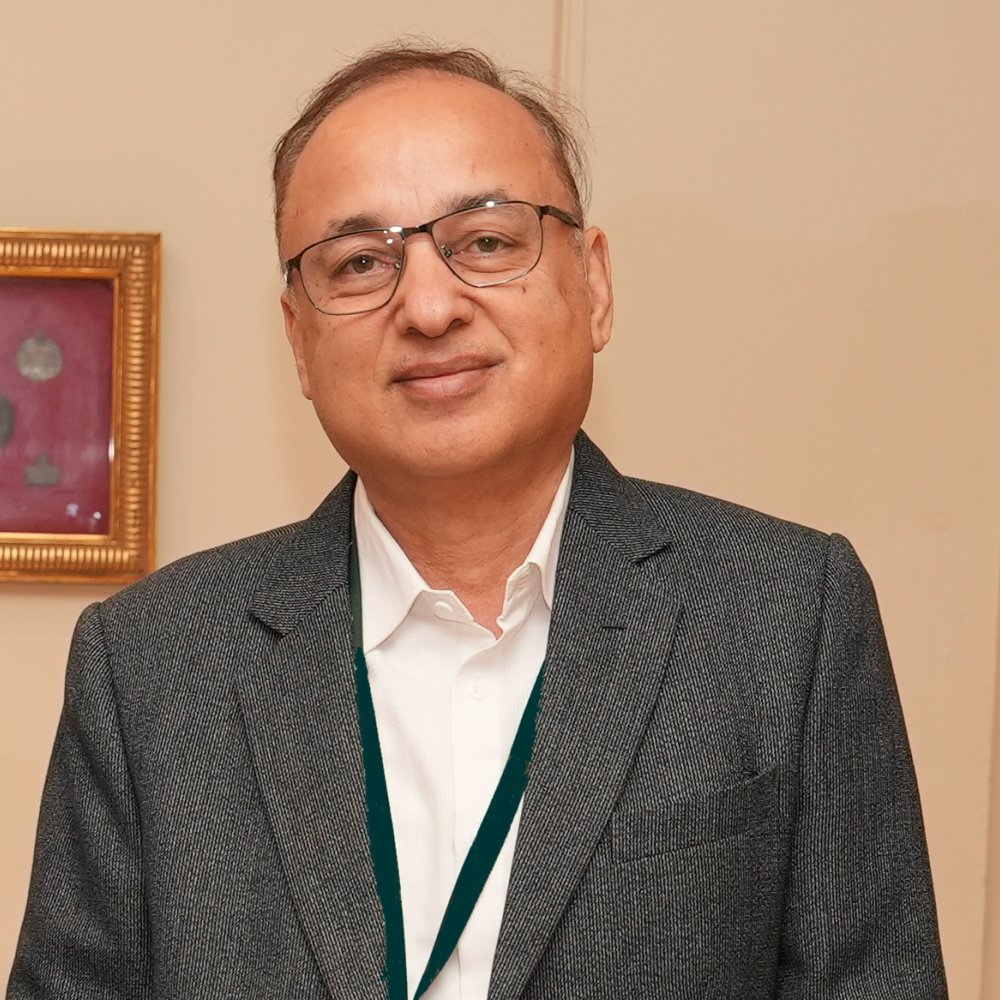
In high-stakes environments, leadership is often reduced to speed and scale. Yet the most enduring leaders understand that true transformation demands something deeper — Trust, Transparency, and an Unwavering Commitment to Listen — To People, To Markets, and To the Early Signals of Change. Avinash Gupta, Global Supply Chain Head, Solar Industries India Ltd., embodies this philosophy. His leadership approach is anchored in dialogue, reflection, and purpose, guiding strategic decisions from integrating global standards with local realities to embedding ESG into the fabric of the enterprise. In this free-wheeling leadership dialogue, he reveals why resilience is more about responsiveness than redundancy, how technology must serve humanity, and why leadership today is measured not just by metrics or milestones, but by the belief you cultivate, the values you uphold, and the impact you create — within your teams, across ecosystems, and for the generations that follow. Excerpts…
Having navigated transformation across both the automotive and industrial sectors, what leadership insights have you gained about driving growth amid disruption?
The first catalyst for any transformation is strong conviction from the CEO and leadership team — the belief in the need to act and the willingness to take a leap of faith. Doubts may arise: are we taking the right steps, will the returns justify the effort? Most CEOs seek a clear business case before embarking on major transformation. Yet, when all factors are considered, the courageous decision to begin is essential, even though the road ahead is often filled with obstacles.
Technology frequently plays a significant role in transformation. However, true transformation is not driven by technology alone — it is powered by mindset. Across automotive and industrial sectors, I have seen growth accelerate when leaders make people part of the journey. Clarity of vision matters, but empathy in execution is equally critical. Disruption rewards those who reimagine value, not those who resist change. The best outcomes emerge when strategy meets belief — when teams understand why change matters and feel trusted to make it real. Consistent, visible communication from the CEO reinforces conviction and sustains momentum throughout the transformation journey.
Operational metrics often dominate decision-making, yet you’ve consistently driven transformation through customer experience. How do you balance process discipline with emotional intelligence in leadership?
Operational excellence and emotional intelligence are often framed as competing priorities — but in reality, they amplify each other. Processes provide structure, reliability, and measurable outcomes. Yet transformation is ultimately driven by people — mature, experienced teams whose participation and belief determine the difference between incremental change and meaningful breakthrough.
Metrics like efficiency and effectiveness matter, but unless they improve customer experience — which is arguably the most critical performance indicator — their impact remains confined within the organization. I’ve learned that real excellence emerges at the intersection of disciplined systems and empathetic leadership. A leader must listen deeply to understand unspoken concerns, act decisively to drive clarity, and always connect data-driven insights with human impact. It's not a choice between process and empathy — it’s their deliberate integration that creates a culture of ownership, trust, and transformation.
Having worked across geographies, how do you align global standards with local execution in complex and diverse markets? Additionally, what are the cornerstones of creating global alignment while maintaining local agility?
Global alignment doesn't mean uniformity — it means unity of purpose anchored in non-negotiable principles. Whether in safety, ethics, or quality, these standards must be sacred across geographies. But execution must respect local realities. Cultural nuances shape decision-making, influence collaboration, and determine operational speed. Recognizing and respecting these nuances is not an operational concession — it’s a strategic advantage.
A global strategy that flows top-down is effective only when insights travel bottom-up. Local teams must be empowered to innovate within clear boundaries. The cornerstones of alignment, therefore, are clarity of intent, shared values, and distributed decision-making — where the “what” is centralized, but the “how” is owned locally. That’s how global organizations become both consistent and contextually responsive.
Market dynamics are shifting faster than ever — from digital disruption to supply chain volatility. What leadership mindset is needed to stay ahead of such change?
In a world defined by continuous disruption, the urge for control is natural — yet often counterproductive. Today’s most effective leaders don’t seek certainty; they cultivate curiosity. The hierarchy-driven decision models of the past are giving way to agility as the new competitive advantage. Proximity to customers and teams is critical — that’s where you hear the earliest signals of change. The real test of leadership lies in how quickly you interpret those signals, learn from them, and pivot. Resilience today is not about restoring old systems; it’s about continuously adapting and advancing. Leaders must reframe uncertainty as a source of energy and innovation, not risk. It demands a shift from managing stability to leading through ambiguity — with foresight, flexibility, and courage.
The next decade could redefine how India builds, moves, and delivers. What role do you see integrated, intelligent supply chains playing in powering India’s industrial transformation?
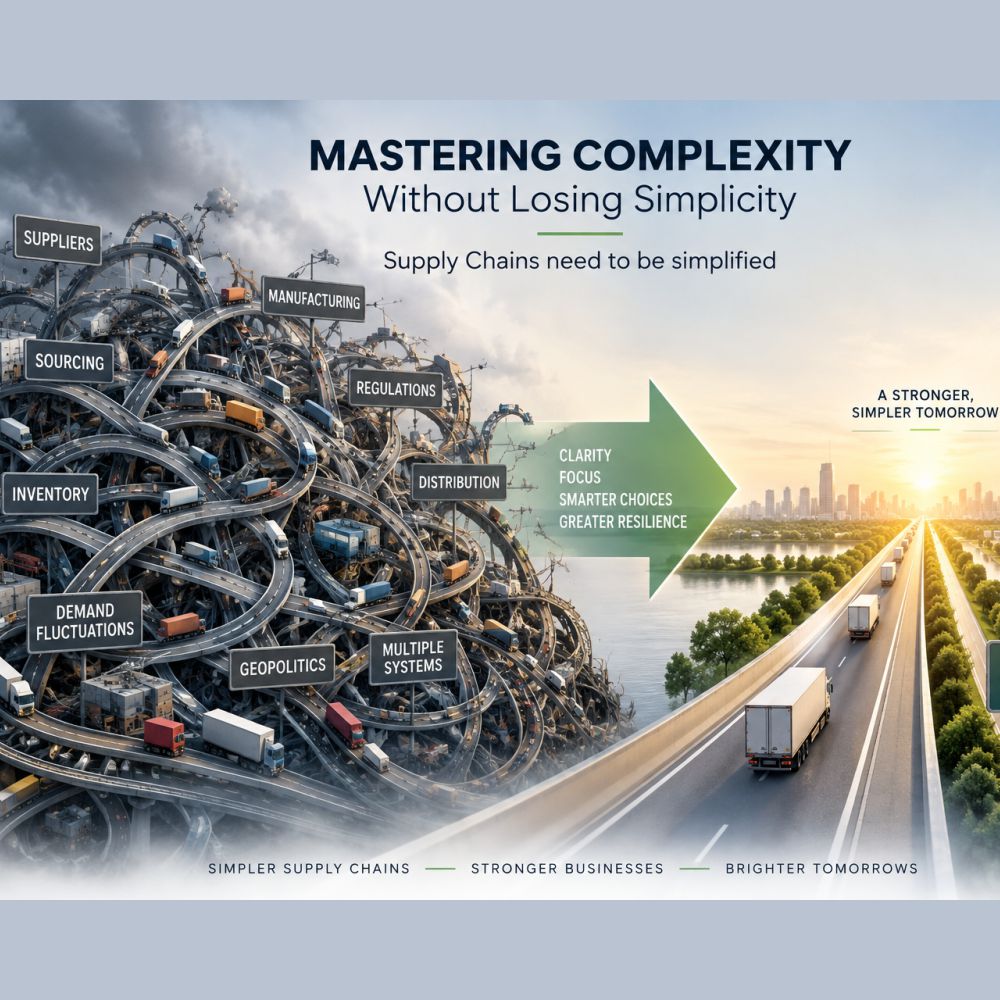
India’s next wave of industrial growth will be defined by the intelligence of its supply chains. It's no longer just about moving goods — it's about orchestrating information, decisions, and action across interconnected networks. Integrated, intelligent supply chains transform efficiency into a strategic advantage — enabling responsive planning, real-time visibility, proactive risk management, and superior customer experience.
Technologies like digital twins, AI-driven simulations, and agentic systems are no longer emerging — they're becoming operational realities. As more Indian industries embed these capabilities into their planning and execution layers, we’ll see unprecedented transparency and speed. This shift will enable sectors like EVs, aerospace, and advanced manufacturing to move beyond cost competitiveness — positioning India as a capability-led partner delivering consistent, world-class standards. The future isn’t just about supply chains being efficient; it’s about them being predictive, regenerative, and a core engine of sustainable industrial innovation.
Resilience is the new growth currency. What makes a supply chain truly resilient in today’s uncertain environment?
The new mandate for customer-centric supply chains is agility—and in that context, resilience is less about redundancy and more about responsiveness. A resilient supply chain can sense disruptions early, adapt quickly, and recover stronger. This requires agile systems—and increasingly, pull-based processes, lean methodologies, and frequent adaptation at the execution level. But resilience demands more than operational flexibility. It requires digital transparency across nodes, diversified sourcing strategies, and deeply collaborative partnerships throughout the ecosystem. Above all, it's a reflection of leadership mindset — a shift from rigid control to rapid learning. In times of disruption, survival isn’t about size. It’s about speed — the speed to sense, decide, and act.
Technology is reshaping how organizations operate. Which emerging tools — from AI to digital twins — do you believe will drive the next wave of industrial transformation?
The next decade will be led by organizations that combine digital intelligence with human intuition. Technologies like AI, digital twins, and smart analytics are already driving precision in manufacturing and proactive risk management in supply chains. But the real transformation will come from integration. When agentic AI and interconnected digital twins orchestrate touchless, self-optimizing supply chains — with human oversight ensuring direction and purpose — we move from automation to orchestration. In that future, technology doesn't just replace manual processes — it augments human judgment and unlocks new levers of competitive advantage. The winners will be those who understand that exponential transformation comes not from isolated tools, but from connected intelligence.
Beyond efficiency, digitalization is now about intelligence. How can leaders ensure technology adoption creates both business and human impact?
Technology without purpose is noise. The real challenge for leaders is ensuring that digital adoption enables people, not replaces them. I believe human impact must sit at the core of every tech investment — empowering employees to make smarter decisions, improving customer experiences, and creating sustainable value. So, I see future workplaces having a combination of human beings and AI agents working together to create value for the customers and enterprises and keeping the human part of organization intact, providing them with many more levers to eliminate nonvalue adding and repetitive jobs at faster speed. In this way technology becomes subservient to humanity and not the other way around.
Sustainability and ESG are becoming central to boardroom discussions. How can Indian manufacturers and supply chains balance growth with responsibility?
Sustainability is no longer a choice — it’s a strategic imperative. The real question isn’t whether Indian industry can afford the shift, but how quickly it can adapt. Historically, sustainability has been perceived as a cost burden, but that mindset is giving way to a new reality: that responsible growth can drive long-term competitiveness.
The opportunity lies in rethinking fundamentals — from adopting recyclable or biodegradable packaging materials to designing reverse logistics that enable circular use of resources. Companies must move beyond compliance to embed sustainability into the heart of their strategy, integrating cleaner production, smarter logistics, and regenerative business models.
This shift demands visibility. Tracking carbon footprints, digitizing material flows, and investing in transparent platforms are no longer optional — they are prerequisites for credibility and resilience. Equally important is the “S” in ESG. When CSR is treated not as statutory obligation but as an opportunity to build capability at the grassroots — through upskilling local talent, enabling small suppliers, or sharing infrastructure — it creates shared value that endures.
Sustainable growth isn’t about sacrificing profit for purpose. It’s about designing systems where business performance and positive impact reinforce each other — driving outcomes that are better for people, the planet, and long-term enterprise value.
India Inc. is entering a defining decade. What excites you most about its evolution and global potential? What do you see as the biggest challenge and opportunity for Indian manufacturers in the next phase of globalization?
India stands at a unique inflection point. The combination of digital strength, a thriving startup ecosystem, and a world-class technology and talent base has given rise to a distinctive competitive advantage. With over 180,000 startups and more than 100 unicorns, India is no longer just a manufacturing base — it’s becoming a capability hub where engineering intelligence meets entrepreneurial agility.
What excites me most is this shift in identity. “Made in India” is evolving into “Designed, Engineered, and Delivered from India.” Yet with opportunity comes responsibility. While our Tier I suppliers are achieving global quality standards, Tier II and Tier III partners still need support in capability development, technology access, and compliance maturity. Scaling globally means elevating the entire value chain.
The next era of globalization will favor those who can balance cost-competitive advantage with consistency in execution, governance, and innovation. If Indian manufacturers can marry discipline with ambition — leveraging digital infrastructure, fostering vendor development, and embracing sustainability — we have the potential not just to participate in the global industrial story, but to lead it.
As India aspires to become a $5 trillion economy, which sectors or capabilities will determine whether we reach that goal sustainably?
India’s path to $5 trillion will depend on how we scale manufacturing, energy, and logistics with digital intelligence. Sectors like automobiles, electric mobility, clean energy, electronics, and advanced materials will be at the forefront of growth. Integrated logistics systems will be needed to catapult Indian manufacturing to world level. Multimodal logistics parks, inland waterways, coastal waterways – all of them will have to be developed to a level so as to provide very cost-efficient logistics, providing competitive edge to exports. Domestic consumption will continue to be the driver of GDP growth, driven by improving incomes and more people joining the workforce. India will have the youngest workforce, giving it distinct edge over other nations where workforce will be aging. To unlock true potential, agriculture must also undergo a technology-first transformation — improving yield, reducing waste, and integrating farmers into value chains. Manufacturing 4.0 will need to be supported well by supply chain digitization, workforce upskilling, and governance maturity! The goal isn’t just scale — it’s smart, inclusive, and resilient growth.
Governance and transparency are under sharper focus than ever. From your experience, what must change in the culture of Indian boards to strengthen long-term value creation?
Boards must evolve from oversight to foresight. Governance today isn’t just about statutory compliance — it’s about enabling innovation, protecting stakeholder interests, and steering long-term resilience. For Indian boards, the shift must begin with mindset: creating space for open dialogue, dissenting perspectives, and future-focused decision-making. Strengthening board culture means embedding transparency and accountability deep into the organization’s operating fabric. Leaders must champion purpose alongside performance. The strongest boards aren’t just watchdogs of risk — they’re architects of trust, resilience, and sustained value creation.
You’ve led transformations across legacy organizations. What are the most effective ways to build alignment and momentum for change?
Legacy organizations come with deeply embedded strengths — and deeply ingrained habits. Transformation begins with belief, not plans. Alignment grows when people understand the ‘why’ before the ‘how.’ Creating forums for open dialogue, inviting feedback, and showing how change benefits the individual as much as the enterprise accelerates buy-in. Momentum depends on small wins that build confidence. Transparency in communication, recognition of progress, and leadership that listens with empathy help build a shared sense of ownership. Ultimately, change that’s co-created, rather than imposed, sustains longer and runs deeper.
For young professionals entering the manufacturing and supply chain space, what capabilities will separate future leaders from followers?
Tomorrow’s leaders will need curiosity, cross-functional agility, and the courage to challenge convention. Technical expertise will matter, but systems thinking — connecting dots across customers, operations, and sustainability — will matter more. Emotional intelligence and digital fluency will separate leaders from managers. The future belongs to those who can blend intelligence with integrity and drive with empathy.
As you transition toward board and advisory roles, what kind of enterprises or governance challenges do you hope to contribute to most?
I’m drawn to enterprises at pivotal inflection points — where growth must be balanced with governance, and legacy reimagined through reinvention. As I step into board and advisory roles, my focus is on strengthening governance frameworks, enabling digital transformation, and fostering human centric cultures. The work I find most fulfilling is helping leadership teams scale responsibly — ensuring that transformation is not only ambitious, but also strategic, sustainable, and values led.
Up, Close & Personal
What does success mean to you today — and how has that definition evolved over the years?
Earlier, success meant milestones — Roles, Results, and Recognition. Today, it means Impact. I measure success by how many people and organizations I’ve helped grow. Creating lasting value — not just financial, but cultural and human — has become more meaningful. Success now is less about being the best in the room and more about making others believe they can be. Success, for me, has moved from Achievement to Impact. Earlier in my career, it was about Milestones — Titles, Targets, Transformations Delivered. Today, it’s about Significance — how many people and organizations I’ve helped grow. True success is when your influence outlasts your involvement.
When faced with difficult decisions, what personal compass or philosophy guides you?
My compass has always been Clarity of Purpose and Consistency of Values. I try to pause and ask: What creates long-term trust? In moments of ambiguity, integrity becomes the anchor. You can recover from a wrong call, but not from a compromised one. Doing the right thing — even when it’s the harder thing — has never failed me.
Is there a book, idea, or mentor that profoundly influenced your leadership journey?
I want to mention about the philosophy behind the book ‘Leading from the back to achieve impossible’ by Mr. Ravi Kant, former MD of Tata Motos and Harry Paul and Ross Reck. My leadership philosophy is strongly influenced by this thinking and Mr. Ravi Kant’s influence on mine and a generation of leaders at Tata Motors has been deep and profound. I find it very relevant for budding managers of today.
Outside of work, what passions or pursuits keep you grounded and inspired?
Nature and travel keep me grounded. I enjoy exploring new cultures — they remind me how perspective changes everything. I also find energy in mentoring young professionals; it’s rewarding to share learnings and see them create their own path. Simple moments with family, or a quiet walk, often bring more insight than any boardroom discussion.
How do you disconnect and find balance when work demands are high?
Balance isn’t about switching off — it’s about recharging meaningfully. I disconnect by spending time in nature or with family, away from noise and structure. Reflection and silence help me process, reset, and return sharper. Leadership can be consuming, but perspective is what keeps it human.
What’s a misconception people often have about leadership that you’d like to correct?
That leadership is about having all the answers. It’s not. It’s about asking better questions, listening deeply, and creating space for others to contribute. The strongest leaders I’ve met aren’t the loudest in the room — they’re the most grounded. Leadership, at its core, is less about authority and more about authenticity.


 Categories