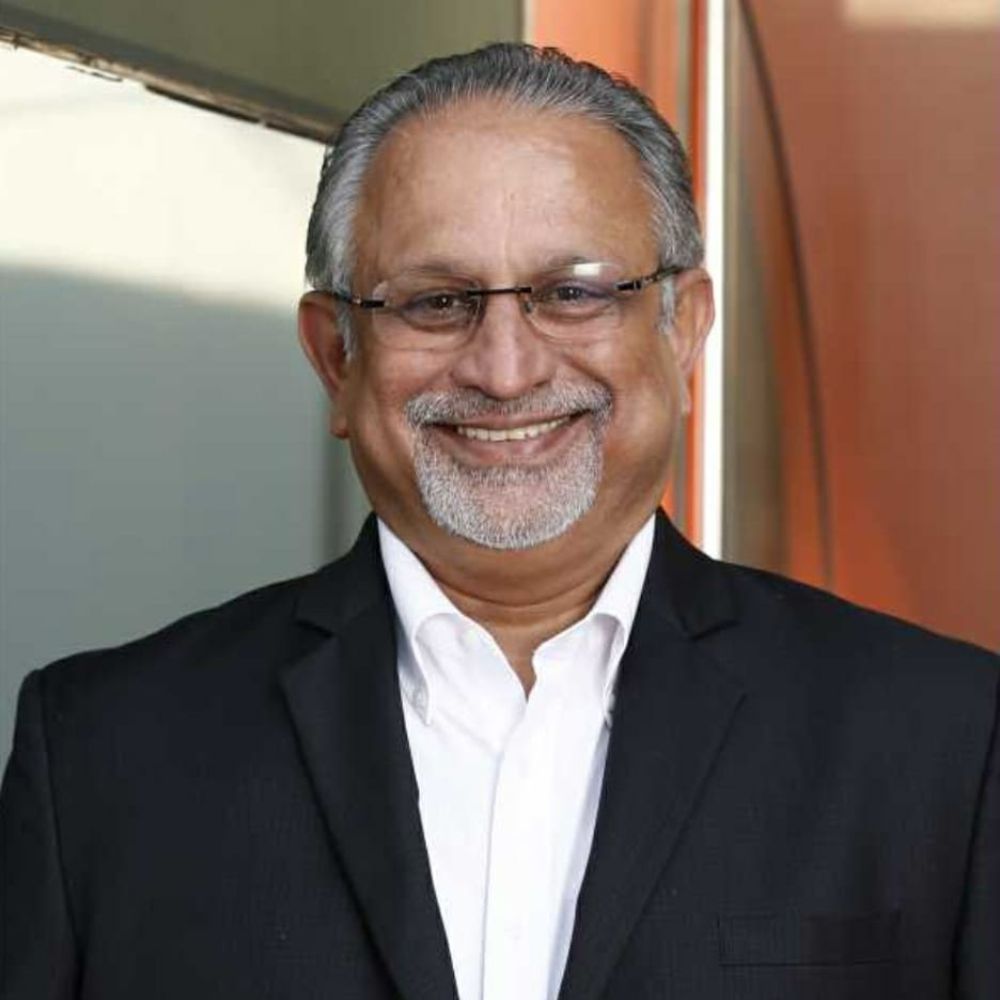
India’s maritime sector is undergoing a structural transformation—one that goes beyond infrastructure upgrades to reshape how the country participates in global trade. From fleet expansion and port efficiency to digital integration and multi-corridor connectivity, the shift is systemic and strategic. In this conversation, Dr. Asha Pillai, Chief Strategy Officer, Docker Vision, unpacks how policy alignment, capital investment, and technology adoption are converging to build a more resilient, efficient, and globally competitive maritime ecosystem—positioning India not just as a trade participant, but as an emerging force capable of influencing the future of global shipping and logistics.
India’s maritime reforms mark a decisive shift toward systemic transformation. Where are you already seeing early signs of impact across fleet development, port efficiency, and logistics integration?
Dr. Asha Pillai
India’s maritime reforms are now translating into tangible, system-level outcomes, indicating that the transition is no longer confined to policy articulation but is being realised through execution. One of the most visible early indicators is in fleet development, where there is a growing trend of global operators choosing to bring vessels under the Indian flag. This reflects rising confidence in India’s regulatory clarity, policy direction, and long-term trade potential. For a country that has historically played a limited role in ship ownership, this marks a structural move toward greater participation and control in maritime trade flows.
On the port efficiency front, reforms such as ONOP (One Nation One Port Process) are addressing long-standing inefficiencies caused by fragmented procedures. By standardising documentation and workflows across ports, India is improving predictability for operators and reducing variability in operations. This is translating into faster cargo handling, reduced vessel turnaround times, and lower logistics costs—factors that are critical for enhancing global competitiveness.
At the same time, logistics integration is gaining momentum through improved hinterland connectivity and digital platforms. Investments in rail, road, and inland waterways are enabling smoother cargo movement between ports and inland consumption centres. Digital systems are further enhancing coordination among stakeholders, reducing delays and improving visibility. Together, these developments signal a shift toward a more synchronised and efficient maritime ecosystem.
With financing, shipbuilding, and regulatory frameworks being strengthened together, how is India accelerating its journey toward greater maritime capability and scale?
The current phase of India’s maritime transformation is characterized by the convergence of three critical enablers— Capital, Policy, and Technology.
Historically, these elements have operated in silos, limiting the sector’s ability to scale. Today, their alignment is creating a more cohesive and enabling environment. The ?25,000 crore maritime development fund is a significant step in addressing the sector’s financing constraints. Access to capital has long been a limiting factor for shipbuilding and infrastructure development. This fund is enabling investments not only in capacity expansion but also in modernisation and technological advancement, thereby creating a pathway for sustainable growth.
Regulatory frameworks are also evolving to become more facilitative, reducing barriers to entry and encouraging participation from both domestic and international stakeholders. This is helping build confidence and attract long-term investment. India’s shipbuilding sector is witnessing qualitative improvements as well. The adoption of alternative fuel technologies, such as LNG and ammonia-powered vessels, reflects a forward-looking approach aligned with global sustainability trends. Strategic collaborations with global technology providers are further enhancing capabilities by bringing in advanced expertise and modern practices. This convergence of financing, policy support, and technological advancement is enabling India to move from incremental progress to scalable and globally competitive maritime capability.
As India expands its presence in global shipping networks, how is it strengthening its role and influence to secure long-term trade interests?
India is undergoing a strategic transition from being a passive participant in global shipping networks to becoming a more active and influential player. A key component of this shift is the effort to reduce dependence on foreign transshipment hubs, which has historically increased costs and limited control over trade flows. Investments in domestic port infrastructure and transshipment capabilities are now enabling India to retain a greater share of its cargo within its own ecosystem. This not only improves efficiency but also enhances strategic control over logistics networks.
The increasing preference for Indian-flagged vessels reflects growing trust in the country’s regulatory and operational environment. This trend strengthens India’s position within global shipping networks and enhances its ability to influence trade patterns over time. Beyond infrastructure, India is focusing on improving efficiency, connectivity, and reliability—factors that are critical for attracting global trade flows. As these improvements continue, India is positioning itself not just as a participant but as a strategic hub capable of shaping global maritime dynamics.
The Strait of Hormuz disruption has tested global supply chains. How effectively has India managed continuity of trade during this period?
India’s response to the Strait of Hormuz disruption reflects a calibrated balance of diplomacy, operational readiness, and strategic coordination. At a time when geopolitical tensions threatened to disrupt critical energy flows, India ensured continuity through proactive engagement at multiple levels.
Diplomatic channels played a crucial role in securing safe transit for Indian vessels, underscoring the importance of sustained geopolitical relationships in safeguarding trade routes. This was complemented by operational measures, including targeted naval support, which ensured the safe movement of sensitive cargo such as petroleum.
What distinguishes India’s approach is the integration of diplomatic, defence, and commercial responses into a cohesive strategy. Rather than reacting in silos, the system functioned in alignment, minimising disruptions and maintaining stability. This not only ensured continuity of trade but also reinforced India’s credibility as a dependable maritime player capable of navigating high-risk environments with confidence.
What does India’s response reveal about its operational preparedness and coordination across maritime stakeholders?
India’s response highlights a clear shift from fragmented operations to a more coordinated and responsive maritime ecosystem. Traditionally, the sector has been characterised by siloed functioning, but recent developments indicate growing alignment across stakeholders. Ports responded with agility by introducing relief measures that eased pressure on exporters, reflecting both operational flexibility and a broader understanding of supply chain implications. At the same time, coordination between government agencies, port authorities, and commercial operators ensured that decisions were implemented swiftly and effectively. This level of synchronization points to improving institutional maturity. Preparedness today is no longer defined by isolated efficiency but by the ability of the system to act cohesively under stress. India’s evolving coordination mechanisms signal progress toward a more integrated and resilient maritime framework.
How is India strengthening its ability to prioritise and manage critical cargo flows during such high-pressure situations?
India is moving toward more intelligent and differentiated cargo management frameworks, recognising that prioritisation is critical in high-pressure scenarios. Instead of uniform processing, ports are adopting exception-based models where essential cargo is identified and fast-tracked.
This shift is supported by improved data visibility and digital systems, enabling operators to make more informed decisions about resource allocation. By focusing on urgency and strategic importance, ports can ensure continuity of critical supply chains even during congestion or disruption. Beyond resilience, this approach enhances efficiency by reducing bottlenecks and optimising throughput. It reflects a broader transition toward operational intelligence, where responsiveness is driven by data and context rather than static processes.
What long-term capabilities is India building to ensure that future disruptions are handled with greater agility and foresight?
India is investing in capabilities that enable a shift from reactive responses to anticipatory logistics. Central to this transformation is the development of digital infrastructure that provides real-time visibility across maritime operations. When combined with predictive analytics, this allows potential disruptions to be identified early and addressed proactively. Integrated planning systems further enhance coordination, ensuring that stakeholders can respond in a timely and aligned manner.
In addition to technology, there is a growing emphasis on institutional preparedness through structured response frameworks and scenario planning. Together, these capabilities are building a more agile and resilient maritime ecosystem—one that is better equipped to navigate uncertainty with foresight rather than reaction.
How is India advancing diversified trade corridors and maritime routes to enhance supply chain resilience?
India’s multi-corridor strategy reflects a deliberate move to reduce reliance on traditional chokepoints and build greater flexibility into trade networks. By developing alternative routes and strengthening multimodal connectivity, the country is creating a more adaptable logistics framework. This diversification enables supply chains to reroute efficiently in response to disruptions, reducing vulnerability to geopolitical or operational shocks. It also enhances access to new markets, supporting trade expansion and economic growth. Importantly, the strategy is not just about risk mitigation—it is about future-proofing. A diversified network allows India to respond dynamically to changing global conditions, positioning it as a more resilient and competitive player in international trade.
How are regional partnerships and corridor initiatives contributing to India’s evolving maritime strategy?
Regional partnerships and corridor initiatives are becoming central to India’s maritime strategy, enabling both connectivity and strategic positioning. By actively participating in initiatives such as the India-Middle East-Europe Economic Corridor (IMEC) and the International North-South Transport Corridor (INSTC), India is expanding its access to global markets while reducing transit dependencies. These corridors enhance efficiency by offering alternative routes that shorten transit times and improve reliability. IMEC, for instance, strengthens India’s linkage with Europe through the Middle East, while INSTC opens up access to Central Asia and Russia—together diversifying trade pathways and reducing over-reliance on traditional routes.
Beyond logistics, these initiatives deepen economic partnerships and strengthen India’s role within emerging trade architectures. They enable closer alignment with regional economies while creating new opportunities for trade expansion. More significantly, they reflect a shift toward a networked model of connectivity—where multiple corridors provide flexibility, redundancy, and resilience. By embedding itself within these frameworks, India is not only improving connectivity but also positioning itself as a strategic node in the evolving geometry of global trade.
As India demonstrates stability during disruptions, how can it further translate this into strategic influence within global maritime trade?
Reliability is increasingly becoming a strategic currency in global trade, particularly in an environment marked by uncertainty and disruption. India’s ability to maintain continuity of trade flows during challenging periods has begun to build credibility among global stakeholders. However, the next phase lies in converting this operational strength into sustained strategic influence. To do so, India must institutionalise reliability as a defining characteristic of its maritime ecosystem. This means ensuring consistency not only during crises but also during normal operations—creating a perception of dependability that global supply chains can rely upon. Over time, such consistency strengthens India’s positioning as a preferred logistics and transshipment hub.
Beyond perception, there is a need to deepen integration with global trade networks. This involves attracting long-term cargo commitments, strengthening relationships with logistics stakeholders, and expanding into value-added services such as warehousing, distribution, and supply chain management. These capabilities enhance stickiness, making India not just a transit point but a critical node within global trade systems. Ultimately, the transition from resilience to influence will depend on India’s ability to combine stability with efficiency and connectivity. When these elements align, reliability becomes more than an operational outcome—it becomes a strategic lever.
How is India leveraging real-time data visibility and digital platforms to enhance decision-making across maritime operations?
Digitalization is fundamentally transforming how maritime operations are managed, shifting the ecosystem from fragmented and manual processes to integrated, data-driven workflows. Platforms such as NLP-Marine (“Sagar Setu”) are central to this transition, providing a unified interface for the submission and processing of ship and cargo-related data. By enabling real-time data visibility, these platforms are reducing delays associated with documentation and approvals. Stakeholders across the value chain— from port authorities to logistics providers—can access the same information simultaneously, improving coordination and reducing inefficiencies.
More importantly, real-time visibility is enabling a shift in decision-making paradigms. Instead of reacting to issues after they arise, stakeholders can anticipate challenges and respond proactively. For instance, insights into vessel movements, cargo congestion, or port capacity allow for better planning and resource allocation.
The integration of stakeholders onto a single digital platform also enhances transparency and accountability. As these systems mature, they will play an increasingly strategic role—supporting advanced analytics, forecasting, and long-term planning. Digitalisation, therefore, is not just improving operational efficiency; it is redefining how decisions are made across the maritime ecosystem.
What role can AI-driven analytics and predictive intelligence play in strengthening risk management and operational efficiency?
AI-driven analytics has the potential to significantly elevate both operational efficiency and risk management capabilities within the maritime sector. In an environment characterised by complexity and unpredictability, the ability to analyse large volumes of data and extract actionable insights is becoming increasingly critical. One of the key advantages of AI is its ability to enable predictive decision-making. By identifying patterns and trends, AI systems can forecast potential disruptions—whether related to equipment failures, port congestion, or external factors such as weather or geopolitical developments. This allows stakeholders to take preventive action, reducing the likelihood of disruptions and minimising their impact.
From an operational perspective, AI can optimise multiple aspects of maritime activity. Predictive maintenance can reduce downtime by identifying issues before they escalate. Demand forecasting can improve planning accuracy, ensuring that resources are allocated efficiently. Congestion management systems can enhance throughput by optimising vessel scheduling and berth allocation.
In terms of risk management, AI provides a more dynamic and comprehensive view of potential threats. By continuously analysing multiple data points, it enables more informed and timely decision-making. As adoption increases, AI will become a central component of a resilient and adaptive maritime ecosystem.
How close is India to building a fully integrated, intelligent maritime ecosystem connecting ports, vessels, and logistics networks?
India is making steady and meaningful progress toward building an integrated and intelligent maritime ecosystem, but full realisation will require further alignment across multiple dimensions. Significant advancements have been made in digital platforms, infrastructure development, and policy frameworks. However, true integration requires seamless interoperability between ports, shipping operations, logistics providers, and regulatory systems. While individual components are becoming more advanced, the challenge lies in connecting them into a unified and cohesive network.
Achieving this level of integration will require standardisation of data formats, alignment of operational protocols, and enhanced collaboration among stakeholders. Institutional coordination will be as important as technological capability in this process.
The vision is clear: a maritime ecosystem where information flows seamlessly, decisions are made collaboratively, and operations are optimised in real time. India has laid a strong foundation, and the trajectory is positive. The next phase will focus on deepening integration and unlocking the full potential of an intelligent maritime system.
As India scales its maritime ambitions, how is sustainability being embedded across green shipping, port operations, and cleaner logistics?
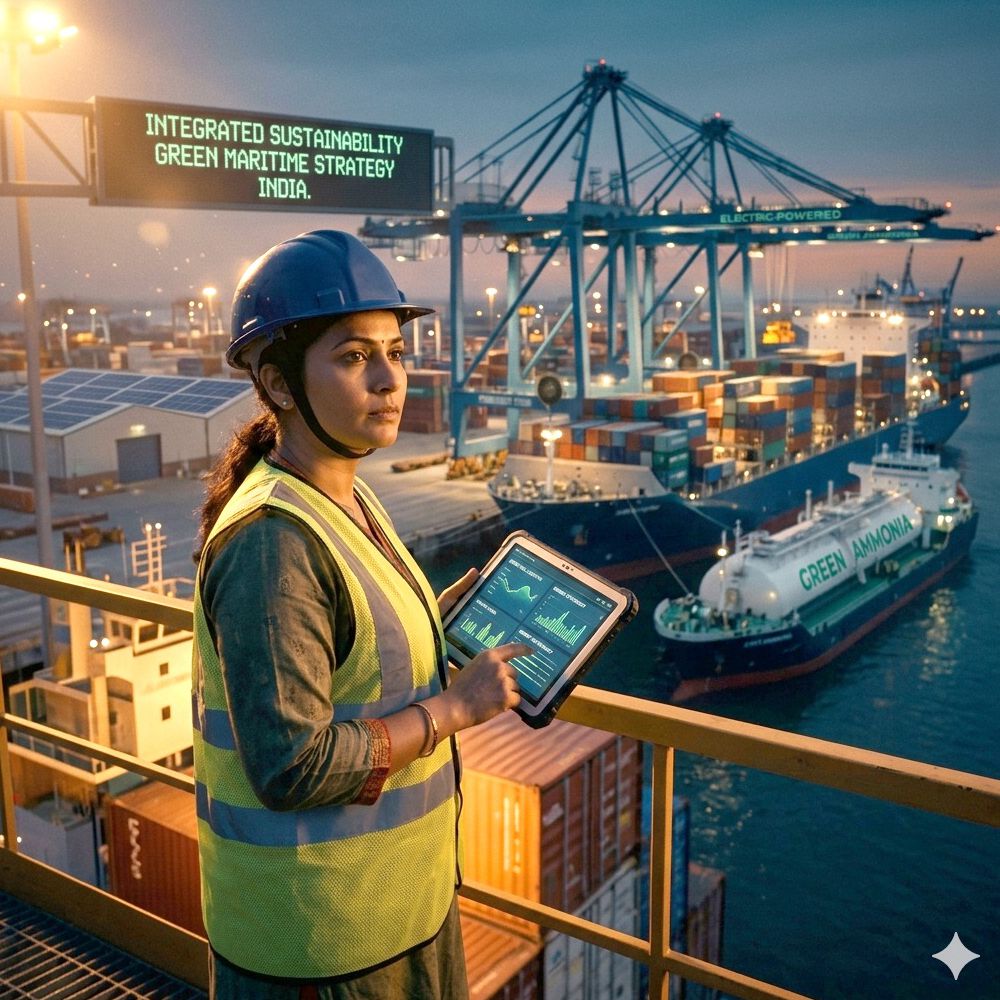
Sustainability is increasingly being integrated into India’s maritime strategy, reflecting both global environmental priorities and the need for long-term operational efficiency. The transition toward greener practices is visible across multiple aspects of the ecosystem. In shipping, there is a growing focus on alternative fuels such as LNG and ammonia, which offer lower emissions compared to conventional fuels. Port operations are also evolving, with initiatives aimed at developing green ports through the adoption of renewable energy, energy-efficient equipment, and sustainable infrastructure.
Logistics systems are becoming more efficient as well, with improved connectivity and integration reducing unnecessary movement and optimising routes. This not only enhances efficiency but also lowers fuel consumption and
emissions. However, the challenge lies in scaling these initiatives while maintaining competitiveness. Sustainable technologies often involve higher upfront costs, and balancing these with economic considerations is critical. The success of this transition will depend on how effectively sustainability is integrated into the broader growth strategy, rather than treated as a separate objective.
What are the top three enablers that will determine success?
The success of India’s maritime transformation will ultimately depend on the effective convergence of three critical enablers—policy consistency, sustained capital investment, and technology-led integration supported by stakeholder alignment.
Policy consistency provides the foundation for long-term planning and investment. A stable and predictable regulatory environment is essential for building confidence among stakeholders and enabling sustained growth. Capital investment is equally important, as the scale of transformation required spans infrastructure development, shipbuilding, and digital systems. Continuous investment is necessary to build capacity, modernise operations, and adopt new technologies.
Technology-led integration is the third and perhaps most critical enabler. While technology provides the tools for efficiency and visibility, its true value is realised only when stakeholders are aligned. Integrated systems, shared data platforms, and collaborative decision-making frameworks are essential for creating a cohesive ecosystem. The real impact will come from how effectively these elements work together. When aligned, they create a multiplier effect— enabling India to build a maritime system that is not only efficient but also resilient, adaptive, and globally competitive.


 Categories