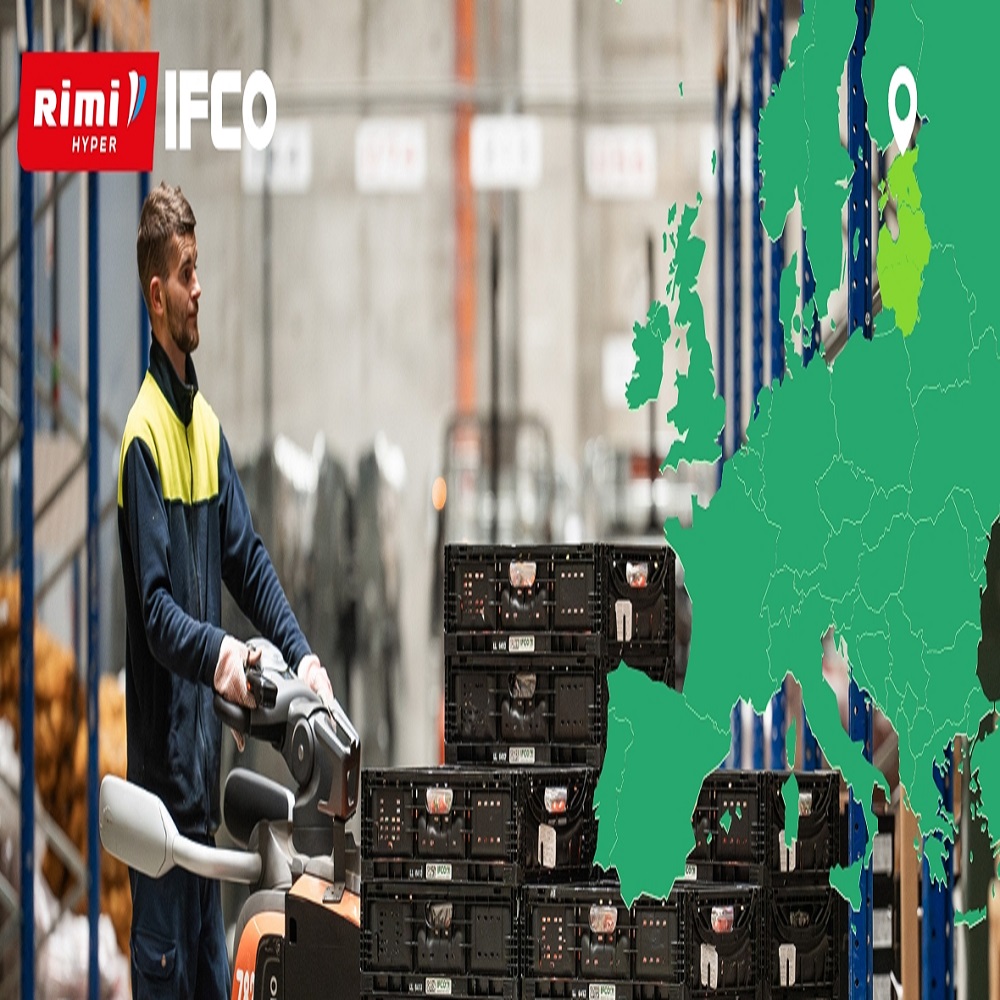
In order to promote sustainable transformation in the fresh grocery industry in the Baltics, IFCO, a leader in the world of reusable packaging solutions for fresh food, has announced a strategic partnership with Rimi, one of the leading retailers in the region. By this collaboration, IFCO gives Rimi the ability to lead the way in developing cutting-edge solutions that drastically lower environmental impact by cutting waste and carbon emissions throughout the supply chain. Through the use of IFCO's reusable packaging, this partnership improves operational efficiency by cutting expenses and simplifying logistics while also reinforcing Rimi's dedication to environmental responsibility.
We are honored to collaborate with Rimi and establish a new benchmark for sustainability in the fresh food market of the Baltic States. "Through this partnership, we can encourage constructive transformation and establish a more environmentally friendly supply chain within the area," stated Daniel Schellenberg, Vice President of CEE & ACH at IFCO.
95% of Rimi's fresh fruit and vegetable flows were previously served by one-way cardboard boxes, which will no longer be used as they switch to IFCO reusable plastic containers (RPCs). Because the IFCO containers are foldable, they further streamline the process, ease administration, and provide further operational and environmental efficiencies in reverse logistics. The remaining 5% replaces stiff crates.
Through our partnership with IFCO, we are expected to save 3,500 tons of CO2 annually, proving the real environmental advantages of our partnership. Furthermore, by already complying with the impending EU PPWR legislation, the move to sustainable packaging guarantees that we are future-proofing our company, says Zanda Sadre, director of Rimi Baltic Corporate Responsibility and Communications.
Enhancing logistics efficiency with IFCO RPC adoption
IFCO RPC adoption standardizes crate types throughout the supply chain and expedites operations. Because there is no longer a need to coordinate individual crate fleet management with nearby producers, this streamlines logistics, increases productivity, and lowers waste. By switching to IFCO boxes, produce will flow from farms to store shelves more efficiently and sustainably. This shift is expected to boost overall effectiveness.
Rimi’s holistic approach: IFCO crates in import and export flows
By being the first retailer in the Baltics to use RPCs for both import and export flows, Rimi maintains its position as a market leader. This calculated move highlights Rimi's trailblazing position in spearheading sustainability programs in the area's fresh food industry. The worldwide adoption of RPCs improves procedural openness and operational efficiency while significantly streamlining logistical procedures.





 Categories